Occasionally you watch a film and you know it is perfect. Not just perfect technically, but perfect on a different, very personal, level. It stands a cut above the rest for you, untouchable, almost sacred. Yet it isn’t easy to clearly define why such a film is so meaningful to you; it holds an inexplicable power, you simply admire its existence and enjoy what you get from it without questioning why or how. Paris, Texas is, for me, such a film. That said, I have tried to answer some of those whys and hows in the past, though unsuccessfully. Unsuccessfully, because the thoughts I noted down in my journal after my second watch ultimately concerned what I felt the film is about without ever really touching on why it holds the power for me that it does. I rediscovered these notes after watching the film for the third time, and I am now going to share them pretty much as they were, since it appears to me that, other than an occasional new revelation gained by watching it this time around with Laura, my opinions haven’t really changed, and my writing back then put it all more succinctly than I would manage now.
Back in August of 2024 I was lucky enough to rewatch Paris, Texas in the cinema, accompanied by a good friend of mine since school. It was being screened in the Phoenix Picturehouse in Oxford, and a second watch afforded me a little of the clarity needed to be able to talk about it, where the first watch had left me quiet, speechless. So what is Wim Wenders’s most-loved work about? What is there to say of it? It’s not about a ‘good’ person, and it’s not a story of redemption, which perhaps some people think it to be and thus they are left dissatisfied by the film’s conclusion for Travis does little to redeem himself of his past actions. The film is about regret, and guilt, and emptiness. Upon rewatches this regret is all the more palpable as you know Travis’s history and thus every expression he makes, the tears that he can’t suppress when asked about Jane, his silence, his decision to never sleep, the habits he has acquired to occupy his days, all showcase the deep regret he is harbouring about his relationship with Jane and its demise.
Travis wants to restart. I think that’s why he’s so set on walking to the empty plot of land that he bought in Paris, Texas, back when he was still together with Jane and with Hunter. He tells his brother that he believes he could have been conceived in Paris, Texas. Thus, his desire to return there, even though perhaps unconscious to him in the beginning of the film, is, I think, telling of a desire to restart his life. The regret he holds, and the guilt, eat away at him every day. So much so that he cannot fathom continuing his life. For how can he continue a life, a timeline, that includes incidents in its past so regrettable? Travis doesn’t want that life. For to continue it means to keep those incidents, and the regret and the guilt that they have created, alive. It requires a form of acceptance for what he did that Travis can’t submit to, for he doesn’t want any of that past to be a part of who he is; but if he continues living, if he carries on his timeline from where he left off, then it will be. And so he chooses instead to try and return to where he was conceived, to the place where his life began, to Paris, Texas. And Travis attempts to do so with as little memory of himself – of his old life – as possible. He has suppressed his memory as much as he can so that he hardly remembers who he is anymore, or who he knows. In forgetting this identity, he can return to the place of his conception a tabula rasa, a blank slate, ready to be conceived again, to start life afresh, as a person with no history – with none of the past he currently has. He wants to stop one life and start another.
I have seen one person connect the presence of greens and reds in the film – those famous neon moments – to traffic lights, and I think this connection is marvellous, for it links to Travis’s desire to stop and restart. An amber light, I believe, would represent him continuing his current identity, staying on the same timeline that further back holds the events that now fill him with remorse – for the amber is suggestive neither solely of stopping nor of starting. The reds, in contrast, represent the ending of his current identity, and the greens the beginning of a new one should he be reconceived in Paris, Texas as he wishes. There he will find his empty plot of land; an empty man in an empty land, a fatal blank slate, a chance to restart. In Paris, Texas Travis sees the chance of a green light, an escape from existing in this state of amber, of purgatory, that he is in at current, with an identity that he detests and that he has numbed into near non-existence due to the pain it causes him.
Travis doesn’t realise, in the beginning, that this is what he is searching for. He has suppressed so much of himself that he can’t even remember why he is walking to Paris. Paris, Texas. The first word suggesting glamour, romance, high society, before it is grounded by the imagery conjured up by Texas, of desert, sand, rocks, and wilderness. A dream versus reality, perhaps. I think, though, that once he is picked up by Walt, and once he starts regaining his memory and with it a small part of his identity, Travis latches onto a new dream. He thinks now that perhaps he can restart his life with Jane and Hunter – perhaps he does not need that plot of land in Paris, Texas to be reconceived after all. I believe he romanticises a new future, where him and Hunter and Jane are reunited and begin life together again as though the past hadn’t happened. And so he sets out for Houston, guided and rejuvenated by this dream, by this romanticised vision of life ahead (by the Paris, before he is hit with the Texas…).
Upon finding Jane, though, he realises this cannot be. What exactly it is that makes him aware of this I was still unsure of after my second watch. I would have remained unaware after my third, too, if it were not for Laura with whom I was watching it with this time around. I knew that something happened during Travis’s first encounter with Jane through the one-way mirror, something that brought him face to face with reality, that made him realise his hopes of this chance again at life with Jane and Hunter were but a fantasy. It was Laura who pointed out to me what it is, which is that during his first conversation with Jane, while Jane does not yet know who she is talking to, Travis is momentarily taken over by jealousy. He asks Jane if she makes money on the side of what she’s doing, if she ever goes home with her customers to earn a little more, and during this moment Travis briefly loses control of the calm, meditative, stoic composition he has created for himself and becomes agitated, even angry, as his jealousy is let loose for a moment. The genius is, the importance of this brief switch up in his character does not become evident to the audience – though it is immediately evident to Travis – until his second meeting with Jane later on. It is then that we learn of the couple’s past, of how Travis’s jealousy became violent, obsessive, dangerous, and ultimately tore apart his and Jane’s and Hunter’s lives. Travis sees, during that brief moment when his jealousy returns, that he has not changed sufficiently, that this flaw in himself is still there just below the surface, threatening to emerge again. As he recognises this, Travis recognises also that he cannot resume a life with Jane and Hunter like the one they once had for the thing that tore them apart in the first place is still there threatening to do it all over again. Thus, in that moment, it becomes clear to him that his dream of getting that life back is but that – a dream – and so he is hit once more with a very grounding reality (the Texas hidden behind the Paris…).
That is one reading I had of the film and of this moment this time around. Previously, I had another which I think still holds, and which ties back in with the symbolism of traffic lights. In this reading, it is less about the fears Travis holds of what the future could bring should his jealousy reemerge, and more to do with the past and the impossibility of erasing it. In this reading, Travis comes to the realisation that he and Jane cannot start again as though nothing had happened, for the hurt that they both experienced is still there for both of them. They have both tried to suppress it, to disappear, but it is there regardless. And when face to face – or voice to voice – again, this pain is laid bare. Here, Travis realises that they can’t live without their past. Their past is part of who they are as individuals and part of who they are as a couple and as a family. Jane is trying to move on from the hurt Travis caused her. If Travis is back – and he sees this – she can’t move on. Neither of them can. It is impossible for them to be together again in the romanticised, perfect, ‘Paris’ way that Travis dreamed of. To do so would be to continue on this timeline of theirs upon which lie those devastating events that have caused them both so much pain. To do so would be to live in this state of amber light. Neither of them would be able to have their red light followed by their green light – their end of one life and beginning of another. And so Travis must leave.
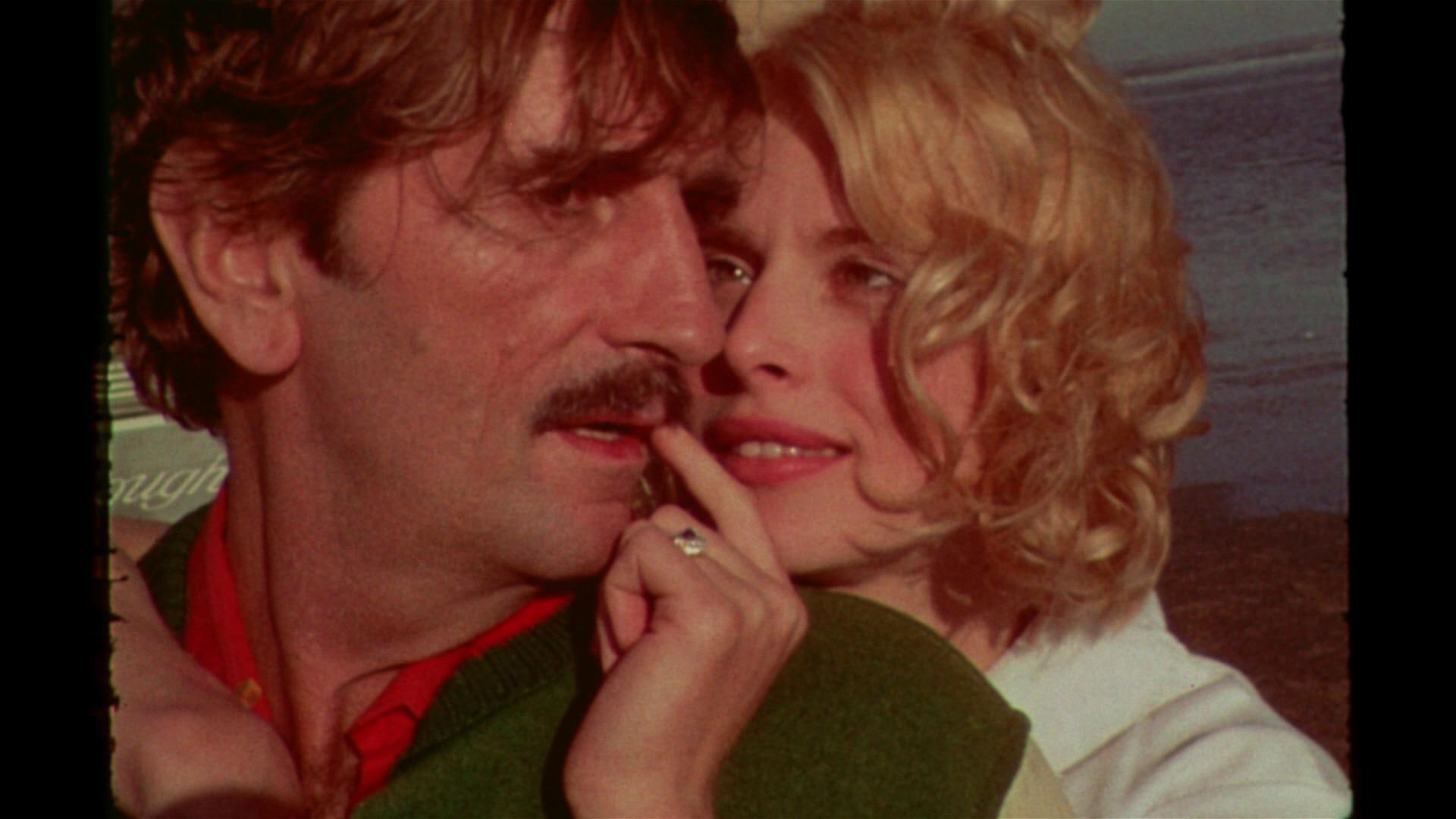
At the film’s conclusion, we are left to assume that Travis is heading back into the wilderness to find his plot of land in Paris, Texas. He has realised, as aforementioned, that he cannot have a green light by reuniting with his family – it cannot be like it was at the beginning, like it was in the old super-8 holiday footage he is shown by Walt. But what he realises, too, is that he can’t get a green light by erasing himself completely, either. He has tried in the past four years to forget everything about himself in hopes (subconscious or not) that doing so will allow him to start life again as a new person. But what he learns over the course of the film, through his reconnection with Walt and with his son and with Jane, is that you can never truly get rid of the past. As much as it has grieved him before, his actions cannot be undone, and his identity cannot be erased. But by the film’s conclusion, I believe he is no longer hurt so much by this fact, for he realises that he doesn’t want to forget Jane and Hunter. They are the only two people in his life that he loves, and as much as he wishes things had gone differently, he cherishes the good moments they had together, and he has learned now that Jane does, too. Jane tried to forget him just as he tried to forget himself, but she couldn’t, not really, and she has realised that she doesn’t want to. Travis was one of the most important parts of her life, and though their time together is now over, she doesn’t want to simply pretend he never existed. In learning this, Travis comes, too, to accept reality, and to finally take that important step towards accepting himself, instead of trying to destroy himself. So, he cannot erase the past, but he can make a future for himself, and he can start in a land where nobody knows him, in a land where there is nothing, so that he can build this future in any way he chooses. That is Travis’s green light, his fresh start, and that is perhaps why he is illuminated in green as he stands on the top of the car park, watching as Jane and Hunter are reunited, before getting in his truck and bringing that chapter of his life to a close.
After all I have said, though, it strikes me that none of these readings of Wim Wender’s masterwork are of much importance. Whether or not one can attach an understanding to Travis’s character or to his and Jane’s relationship is really of no consequence, for the film holds such a power and such a beauty regardless of any psychological understanding of its characters. I believe, although it is fun to attempt to do so, we do not need to know what a film ‘means,’ what it is ‘about’; we simply need to feel it, to let it move us, to let it evoke from us feelings that would otherwise not have surfaced. Ultimately, that is where art’s power lies, in its ability to make us feel and in doing so to teach us a little about ourselves, about what we value, about what moves us, about what we are currently dealing with. To me, that is a film’s meaning, much more so than any literal or critical explanation we can provide concerning its story or its characters or its thematic content. The trouble is, it feels close to impossible to write about a film in terms of such a vague or abstract idea as how it, very subjectively, moves someone. Yet I felt I must keep a record of my thoughts on Paris, Texas, even if it must be in terms too concrete to really put across the power that Wim Wenders has crafted. I hope, between these concrete lines, that some of the film’s true meaning is poking through, though I am aware that the only way to really experience that is through watching the film. Still, we write about films regardless…
April 25th, 2026

 benedicthutchinson.com