Joachim Trier’s latest is a heartfelt and tender examination of loss, absence, grief, and regret, but even more than that it is one of acceptance, forgiveness, love, and of moving on. Rather than holding ourselves back and letting the past destroy our present, rather than dwelling on the bad for longer than we must, Joachim Trier offers a heartwarming and important alternative, and it is through this that Sentimental Value becomes such a complete and enduring whole.
A loneliness and sadness permeate every shot. Even in moments of joy and of celebration there is a melancholy hanging just below the surface, and whether we are alone with Nora in her apartment or at a picnic with her surrounded by her friends, there exists a feeling of isolation and of longing. In great part this is a result of the magnificent performances by Renate Reinsve and Stellan Skarsgård, as well as Elle Fanning and Inga Ibsdotter Lilleaas. Each brings such tenderness and truth to their role that even in the quietest of moments the film is brimming with this unexpressed emotion, with this feeling that something is missing for these characters. There is a pain in Skarsgård’s Gustav Borg and his two daughters (Reinsve and Lilleaas) that sits just barely below the surface of their faces, that peaks out through their eyes or is occasionally given some sort of expression in an outburst or a family argument, but this expression is never enough to justify what they are feeling. They each are in search of a way to truly express this longing and this regret, this pain and this loneliness that haunts them, and while they struggle to find a means to this expression these feelings undertone everything else that they do; and Skarsgård, Reinsve and Lilleas captivate with the way they so genuinely and heartbreakingly portray this conflict.
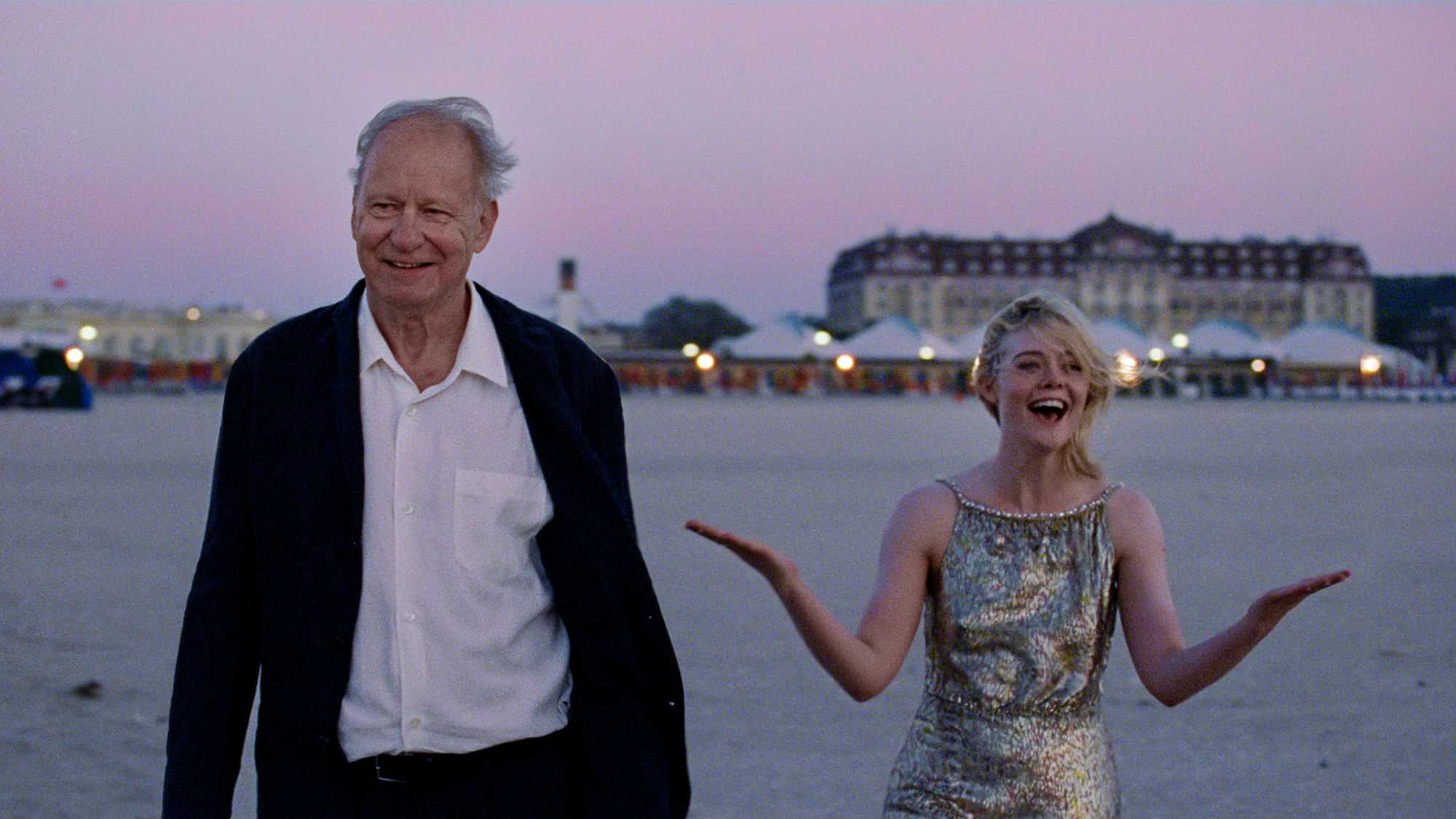
The separation felt between Gustav and his daughters, and the feelings of emptiness and incompleteness that define their lives as a result, are also given voice through Trier’s clever direction and Kasper Tuxen’s gorgeous photography. We are in a time when modern cinema appears to have – regrettably – all but forgotten the art of the shot’s background. The focus, it would seem, of modern cinema in general is on how to make a film most easily-digestible for an audience who only half pay attention, how to ensure an audience with distractions can still follow a plot and not get lost. The result has been an extreme overreliance on shallow-focus photography where if someone were to look away from the screen for a while, they would easily, upon returning their attention, be able to understand what they need to be focusing on because everything else in the shot is out of focus – there is nothing else to pay attention to except for the most key subject in each frame. The consequence of this is that deep focus has all but been forgotten about, and shallow focus is being used without any regard as to the emotional and atmospheric power that it has the potential of bringing to a shot; shallow focus is being denied its artistic merit. With Sentimental Value, Trier and Tuxen remind us, at a crucial moment in time for cinema, just how impactful shallow focus can be when used to create mood and atmosphere, to portray emotion, and to carry a film’s themes, rather than being used only to simplify the plot for the audience. The background is key in Sentimental Value, even, and often most effectively, when it is out of focus. A shadowy wall; a blue empty space; the sea or the sky over a shoulder; these empty spaces and seemingly endless horizons are not merely meaningless backdrops, nor are they out of focus only to ensure that our attention remains with Skarsgård’s or Reinsve’s facial expressions. Instead, this emptiness behind or beside a character is a constant reminder of the loneliness they feel, and of the incompleteness in their lives. The absence of something within these spaces is a symbol of their missing father, of their missing daughter, of their missing mother. In being out of focus, these backgrounds or foregrounds (as it sometimes is) remind us that, because of the divide in their family life and the regret and grief that they feel, these characters can never feel fully involved in what they are doing or where they are. Skarsgård’s Gustav, in one of the film’s most beautiful moments, and in a clear example of the effect of this cinematography, drinks and laughs with Elle Fanning’s Rachel Kemp on the beach, and he even offers her some fatherly advice regarding her acting career. The sun sets and then later rises again behind them, the sky is painted a beautiful pink and purple, but it is all out of focus. Gustav is there on the beach, we see him clearly, but in the empty and out of focus horizon behind him, we understand that he is not wholly there – his thoughts are with his real daughter Nora, and until they have resolved what lies between them, until they have expressed fully what needs to be expressed, until they can understand one another the way they need to be understood, his surroundings will remain out of focus, he will remain caught up in these feelings of longing and of regret. It is in such a way that throughout Sentimental Value Trier and Tuxen keep this sadness and this loneliness ever present, and remind us just how powerful such photographic choices can be.
Sentimental Value is also a beautiful exploration of filmmaking itself, though it doesn’t centre around how we make films, but rather why we do it, and why, in fact, we make art in general. Nora, Gustav, and Agnes are each seeking a means of expression for their feelings regarding themselves, each other, and their shared histories; an expression that will create understanding and harmony at last. For Gustav, this means of expression would be his latest film project, but several obstacles appear determined to prevent this from happening: his daughter Nora refuses to play the lead role, and though he commences rehearsals with Rachel Kemp (Elle Fanning) in her place, they both sense that something is missing; his old friend and go-to director of photography from the past has grown frail and appears unfit for the job; and the funding they need has been provided by Netflix, threatening the possibility of the film being shown in cinemas and thus undermining Gustav’s ultimate artistic aims. Nora on the other hand attempts to use the theatre as her means of expression, acting in various experimental plays to give voice to her inner turmoil, but this proves insufficient and she retreats further and further away from the stage and into herself. Finally, there is Agnes, who on the surface appears calm and content, happily married and with a child, but she, too, is hurting, and unlike her sister and her father, she appears to have no outlet in sight for these feelings, and instead must act as the intermediary between her sister and her father while her own feelings remain hidden away. Gustav, ageing and unwell himself, maintains a determination to get his film made and to have his two daughters involved in it. He understands the importance of this film to himself and to his family as the much-needed means of expressing what he can’t express himself, as his way of finally explaining his absence, and as his gentle plea for forgiveness, understanding, and acceptance. It is around this that the whole of Sentimental Value rotates. Gustav isn’t making this film for the sake of making a film, he is making it as a means of expression for himself, for Nora, and for Agnes. Through this, Joachim Trier demonstrates beautifully the importance of art to the human spirit, not just the importance of seeing art, but the importance of making it, and in doing so he reminds us why art is a fundamentally human experience, and not something that can be created by artificial intelligence, for it is in the process, the failures, the results, the whole damn thing that art finds its purpose.
There are many more moments of greatness in Sentimental Value, from Olivier Bugge Coutté’s editing – especially those instances where we linger with a character for a while longer after the scene has ended before cutting to black while the character is in the middle of something, carrying those feelings of incompleteness and loneliness from one scene to the next – to the touching exploration of both the promising and the saddening ways in which the old gives way to the new. There is even a laughably long credits sequence of production houses at the beginning of the movie that ultimately feels both relevant and poignant in the face of the discussion had in the film around Netflix and its impact on the industry and on theatrical screenings. And amongst all of this, the sadness and the loneliness, the ageing of characters, the feeling that an era is coming to an end, the film retains a warm feeling of hope and of the possibilities that lie ahead. As such, Sentimental Value becomes a perfectly devised whole in which each of its elements works in harmony to deliver a film of great subtlety and heart, and, in typical Trier fashion, offers a gentle yet important commentary on the modern word.
January 14th, 2026

 benedicthutchinson.com
i low-key have to wait to read this bc i want to see the film!!! then read after xoxox
LikeLiked by 1 person
Let me know your thoughts on the film once you’ve seen it!
LikeLiked by 1 person
I gave in and read it. So beautifully written Benedict. I now have to see it immediately!!
LikeLike
You make me laugh. I tried to keep this one spoiler-free so hopefully it won’t impact your experience too much! Thank you so much for your kind words. Definitely go and see it asap!
LikeLike
I want one of these for Marty $upreme! Will definitely be watching Sentimental Value after reading this!
LikeLiked by 1 person
Marty Supreme is next on my list!
LikeLike